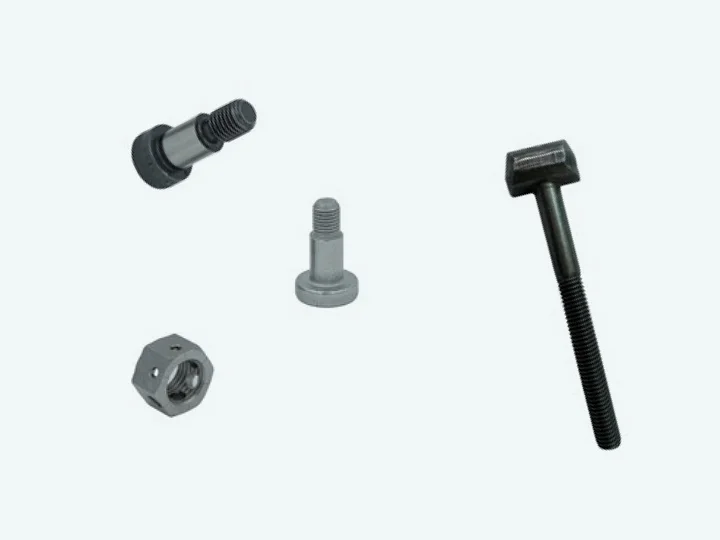
A flange joint torqued exactly to specification can still work loose within a season if the grade, thread form and coating were never checked against the load it carries. Most failures traced back on the shop floor begin at selection, not installation. Industrial nuts and bolts get chosen on price far more often than on what they are made of.
Specifying industrial nuts and bolts around the real conditions of the joint gives maintenance teams predictable clamp load and longer intervals between shutdowns, which protects output and repair budgets together. The decision costs nothing at the order stage. It costs a great deal once housing comes apart in the middle of a production week.
Joint Failures That Start with the Wrong Fastener Choice
Threads That Engage but Never Fully Match: A coarse thread bolt will start into a fine thread nut and feel tight for the first few turns, then strip under load because the flank engagement is wrong. Mixed thread standards on the same site cause this regularly. The joint holds through assembly and gives way once service load arrives.
Grade Markings Treated as Interchangeable: Property class markings on a bolt head state tensile and yield strength, so swapping an 8.8 for a 10.9 changes more than the load rating. Higher strength grades carry greater susceptibility to hydrogen embrittlement after electroplating, which makes the plating process and any post-plating bake as important as the steel itself.
What Deferring a Fastener Review Costs in Service
Loosening That Builds Slowly under Vibration: Cyclic loading rotates a nut a fraction at a time, and clamp load drops long before anything looks loose to the eye. In everyday maintenance work, engineers routinely see joints that passed a torque check months earlier sitting at roughly half their original preload once a gauge goes on them.
Repairs That Grow Larger the Longer They Wait: A loose fastener caught early needs re-torquing and perhaps a fresh nut. Left running, the movement wears the hole, damages the mating face and can crack the flange. The fix then moves to machining, thread inserts or a replacement casting. Cost climbs at every stage, and downtime with it.
Nut and Bolt Designs Matched to Installation and Load
Locking Designs Chosen around Service Frequency: Nylon insert nuts suit joints opened occasionally, while all-metal prevailing torque nuts survive heat and repeated removal. Serrated flange designs spread bearing load and resist rotation without a separate washer. The right choice follows how often the joint comes apart and what temperature it reaches, not what the stores hold.
Material Pairing That Controls Corrosion at the Joint: Fitting a stainless bolt into an aluminium housing puts two dissimilar metals in contact, and with moisture present the resulting galvanic corrosion eats away the softer metal around the hole. Isolating washers, matched grades or a suitable coating prevent it. Coastal air and washdown routines make that decision urgent.
Stock Ranges Compared with Application-Specific Manufacturing
Where Catalogue Sizes Do the Job: Standard hexagon bolts and nuts made to published ISO or DIN dimensions cover most general assembly work, and wide availability keeps lead times short. Inspection stays straightforward because every dimension is documented. The trade-off is a fixed set of lengths, pitches and finishes that will not suit every housing.
When a Purpose-Made Fastener Earns Its Cost: Custom manufacturing makes sense once the joint sits outside the standard tables, such as a non-listed length, a stepped shank, a special head form or a corrosion-resistant grade nobody stocks. Piece price rises against a catalogue item. The return comes from removing a modification step or a repeat failure.
Fewer Unplanned Shutdowns across the Asset Life: Joints assembled with correctly specified industrial nuts and bolts hold preload through thousands of load cycles, so maintenance follows a schedule rather than a breakdown call. Spare lists stay short, second-source supply becomes practical, and equipment built at one plant can be serviced at another without hunting an odd fastener.
Checks Worth Making before Ordering Industrial Nuts and Bolts
A short review of the joint before purchase catches most of the faults that surface later in service. Drawings often name a diameter and a length and stop there, leaving the supplier to assume everything else. The points below cover what buyers should confirm with the assembly conditions in front of them.
- Confirm the thread standard and pitch against the mating component rather than the drawing alone.
- Match the property class to the calculated clamp load, not to the size of the hole.
- State the coating and any baking requirement on the order, since plating affects high strength steels.
- Choose a locking method based on how often the joint will be dismantled in service.
- Check the material of both parts for compatibility before selecting a stainless or coated fastener.
Clamp Load That Holds While the Machine Is Running
Correct fastener selection remains one of the cheapest forms of reliability a plant can buy. A component costing very little decides whether a gearbox stays sealed and whether a production week runs uninterrupted. Postponing that decision usually means paying for it later in emergency labour, damaged housings and delivery dates that slip.
Every hour a machine spends in pieces costs more than the hardware holding it together, and that gap widens the longer a marginal joint stays in service. Send the joint drawing, the load conditions and the operating environment to a precision fastener manufacturer for a specification review before the next order for industrial nuts and bolts goes out.